Last Updated on March 13, 2026 by Hannah Stephenson


This article is a guest post from the lovely Ella McKendrick. You can check out more of her amazing safari guides here! Thank you so much, Ella.
Cape Town is a vibrant city famed for towering Table Mountain, striking beaches and world-class wines. But did you know it also makes an excellent base for safari adventures?
With a number of malaria-free reserves on its doorstep, the city offers easy access to day trip safaris for those with limited time to explore.
Additionally, Cape Town is also only a direct flight away from several world-renowned wildlife destinations, including iconic Kruger National Park in South Africa and the Okavango Delta in Botswana.
With options to suit every budget and timeframe, from day trips to extended fly-in safari experiences, the city is a true gateway to the thrilling world of safari.
Whether you just have a day to spare or want to extend your trip with a multi-night bush experience, Cape Town is the ideal starting point for your dream wildlife encounter!
In this article I’m going to list some of my favourite safari experiences that you can enjoy from Cape Town.
Whilst there are a few private reserves which are slightly closer to Cape Town than the ones I’ve listed, I’ve selected parks and reserves that focus on conservation and provide an ethical and truly wild experience.
1. Sanbona Wildlife Reserve
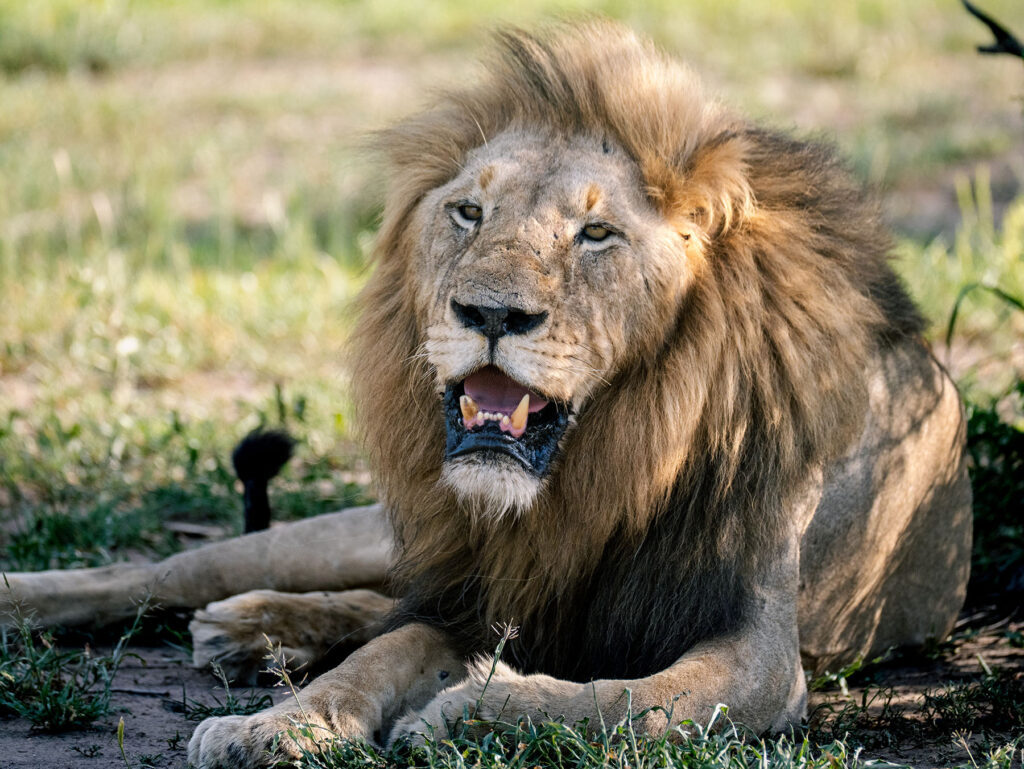
Conveniently located around 3 hours drive from Cape Town along the scenic Route 62, Sanbona Wildlife Reserve is the closest ethical ‘Big Five’ reserve to Cape Town. This means you have the opportunities to see lions, elephants, rhinos, leopards and buffalos here.
Sanbona Wildlife Reserve is a 62,000 hectare conservation area in the malaria-free Klein Karoo region. The reserve is run by non-profit CALEO Foundation and has a strong focus on conservation. It was the first reserve to reintroduce wild lions to the Western Cape and is one of just two places in the world where you can witness white lions roaming free. Pretty cool, right?
As well as the Big Five, Sanbona is home to Cape mountain zebra, hyena, hippos and over 200 bird species. It is also among the few South African reserves with a confirmed population of the critically endangered riverine rabbit.
The park is also known for its 3,500-year old San rock art and its dramatic semi-arid landscapes. There really is so much to see here!
Located at the foot of the Warmwaterberg mountains, Sanbona enjoys year-round rainfall, enabling almost 3,200 plant species (including over 400 endemic varieties) to thrive here.
Accommodation at the park is as varied as its wildlife. Couples will love the romantic, secluded Dwyka Tented Lodge in its ravine setting, while Gondwana Lodge is ideal for families, and the Cape Georgian-style Tilney Manor offers a touch of sophisticated luxury.
During your visit, you can enjoy twice-daily game drives as well as guided nature walks and unique boat safaris on Bellair Dam. After sunset, a spot of stargazing is the perfect way to unwind.
It’s easy to drive from Cape Town to Sanbona if you’re renting a car, but if you don’t feel like driving yourself, you can always arrange a private transfer. However, with its excellent wineries, stunning mountain scenery and charming villages including Montagu with its natural hot springs, Route 62 is well worth the drive.
2. Addo Elephant National Park
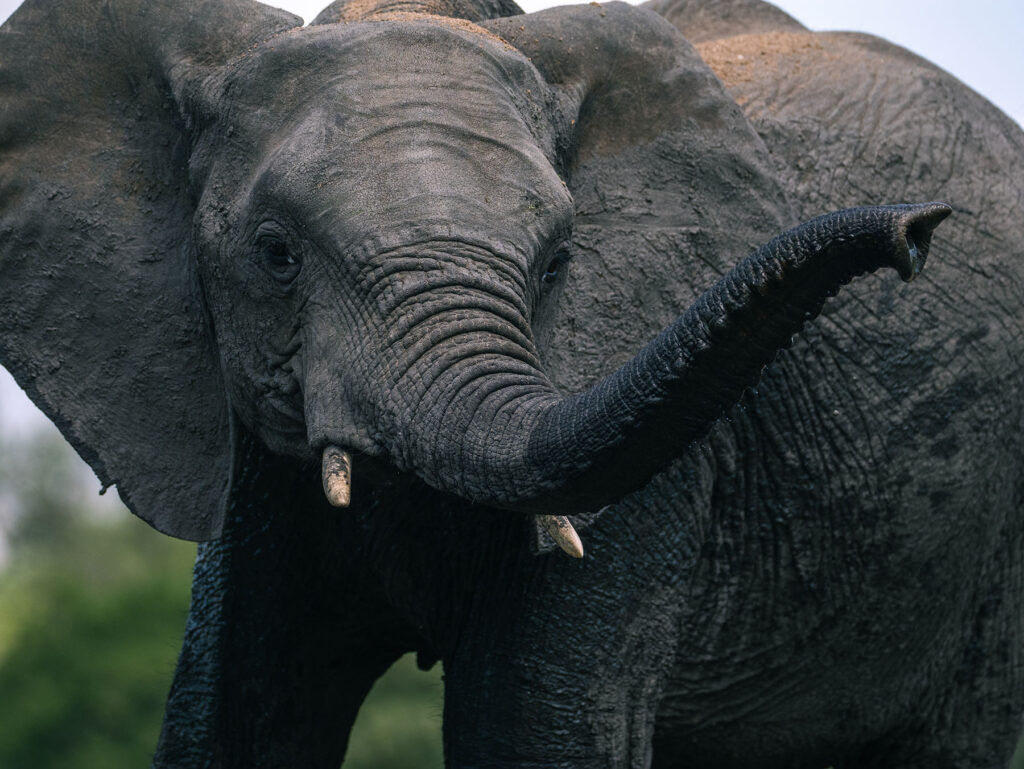
Addo Elephant National Park is South Africa’s third largest national park and one of the country’s best reserves for self-drive safaris.
Originally established in 1931 to protect the area’s remaining 11 elephants, the park now houses over 600 individuals and boasts the highest elephant density per square kilometre in Africa – a true conservation success story!
But you’ll see much more than elephants during your visit! Addo is home to the entirety of the Big Five and its sprawling Marine Protected Area located in Algoa Bay (around 105 km from the park itself) contains dolphins, orcas, great white sharks and four whale species. The presence of whales and sharks makes the reserve one of the rare locations where visitors have a chance of spotting the Big Seven (lion, leopard, rhino, elephant, buffalo, southern right whale and great white shark).
Its malaria-free location and well-maintained roads make Addo a great destination for families and self-drive enthusiasts, while its reasonable rates will appeal to budget-conscious travellers, with entry fees for international visitors set at around R376.
An ideal reserve for independent exploration, Addo offers a variety of accommodation options, from SANParks camps within the park with early-morning access (with gates opening at 6 am) to luxury private lodges such as the top-rated Gorah Elephant Camp.
To access Addo from Cape Town, you can simply fly direct to Port Elizabeth (flight time 1 hour and 15 minutes). From there, it’s just a 1-hour drive to the park.
3. Kruger National Park
South Africa’s most famous wildlife destination (as well as my personal favourite national park in the country!) and one of the largest game reserves in Africa, Kruger National Park is the size of a small country. The 2 million-hectare park is home to healthy numbers of the Big Five, especially lions, but also boasts a staggering number of other species.
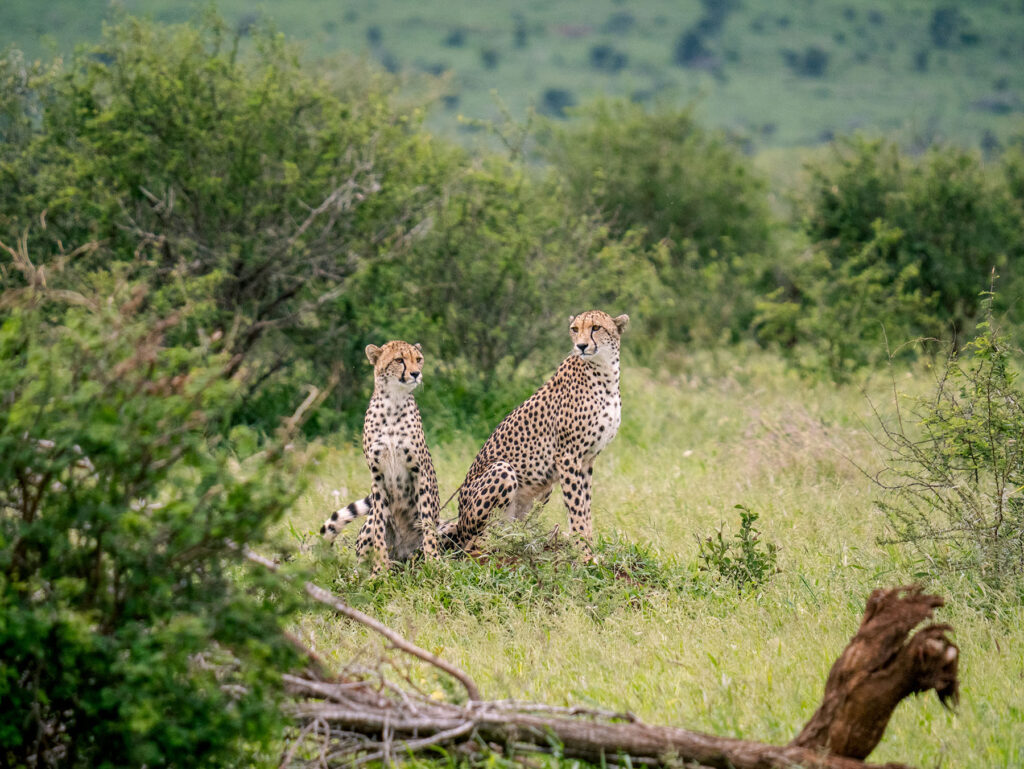
The 148 mammal species that live here include cheetah and African wild dog, two rare and spectacular predators, as well as wildebeest, hyena, giraffe and so much more.
And with a bit of luck, you may even spot some or all of the elusive Secret Seven (serval, African wild cat, aardvark, pangolin, civet, porcupine and large spotted genet). What’s more, there are over 500 bird species and an incredible variety of plant life to take in.
Kruger boasts an excellent infrastructure, with ample rest camps and lodges and well-maintained roads that make it ideal for self-driving, even in 2WD vehicles. That said, game drives with a qualified guide are the best way to get the most out of your visit to this world-class reserve.
I was lucky enough to see a family of three cheetahs on an afternoon guided game drive in the Skukuza region of Kruger National Park. Cheetahs are one of the rarer predators within the park so this was a real pinch-me moment.
From Cape Town, you can fly direct to Skukuza, Hoedspruit or Nelspruit (flight time approx. 2.5 hours) and then either arrange a road transfer or opt to self-drive to the reserve. (Check flights here!) The best time to visit is during the dry winter months (May-September), when animals gather at waterholes in large numbers.
That said, early in the green season (November and December) also has its benefits as the lush green vegetation provides wonderful photo opportunities, herbivores start to give birth and summer migrant bird species start to arrive. I saw so many adorable impala lambs on my November visit.
As Kruger is situated in a malarial area of South Africa, please be sure to consult your doctor to discuss the necessary precautions for your trip.
With so much to see and experience here, you’ll need about 2-5 days to explore properly. There are plenty of accommodation options here, ranging from simple lodges to luxurious retreats.
For a more exclusive experience, you might consider the private reserves bordering Kruger (see Sabi Sand below) which offer off-road drives, walking safaris and night drives.
4. Sabi Sand Game Reserve
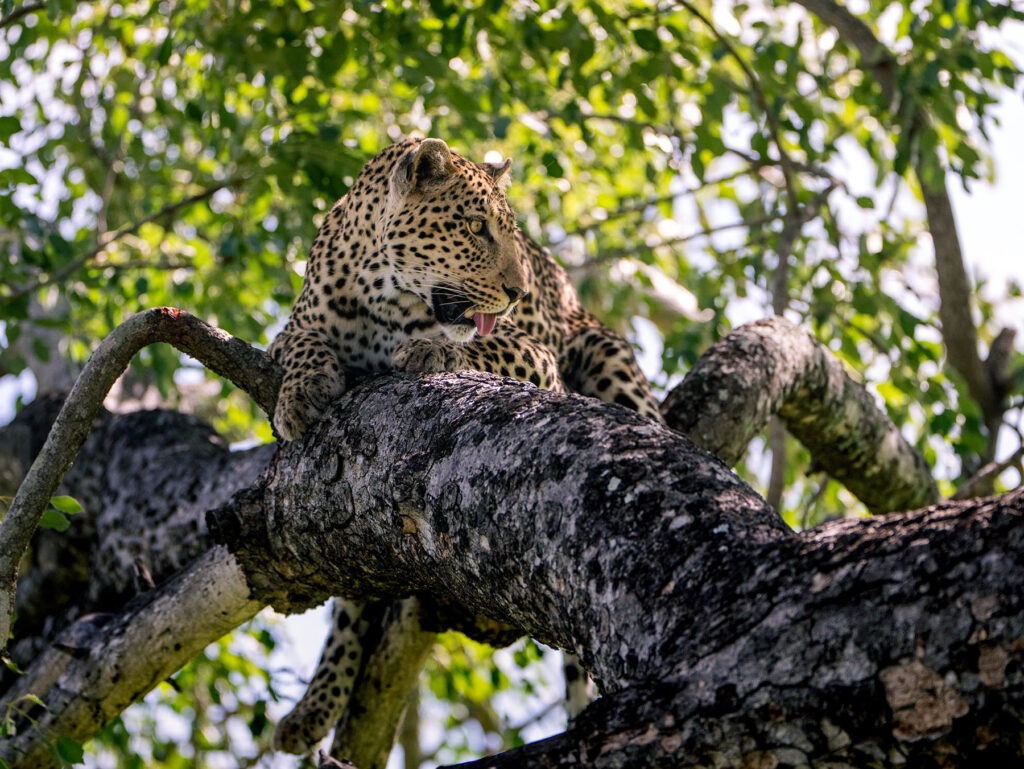
Sharing a 50km unfenced boundary with Kruger National Park, the prestigious private Sabi Sand game reserve is widely considered the best place in Africa to see leopards.
The park is also known for excellent lion sightings and houses an enormous variety of species, thanks to the free passage of wildlife between it and Kruger National Park.
Sabi Sand is special for multiple reasons, but most famously for its remarkably close leopard encounters. Thriving in the excellent conditions here, these big cats have also become so habituated to safari vehicles that they tend to ignore them.
I managed to spot an impressive 10 individual leopards over my time in Sabi Sand, including one sighting of an entire leopard family (mother, father and cub)!
Unlike Kruger National Park, off-road driving, night drives and walking safaris are permitted at Sabi Sand, ensuring unforgettable, intimate encounters with the resident wildlife.
The reserve is home to the Big Five, cheetahs, wild dogs and a wealth of other animals, including over 300 bird species.
Sabi Sand is perhaps my favourite safari location in Southern Africa. But the exclusive nature of safaris here means that it doesn’t come cheap.
Sabi Sand is renowned for its luxury lodges. Londolozi, Singita and MalaMala are some of the most famous. Sabi Sand certainly isn’t a budget safari destination with the most ‘budget-friendly’ lodges costing $800 per person per night.
To reach Sabi Sand from Cape Town, you can fly to Skukuza Airport (approx. 2.5 hours direct) or Kruger Mpumalanga International Airport. (Check flight prices here!)
From there, you can opt for a road transfer or charter flight to your lodge (most lodges in the reserve have their own airstrips).
With so much to see and do, you’ll need at least 2-3 nights at Sabi Sand to really make the most of your stay. I spent 5 nights in Sabi Sand and visited 2 different properties. During my stay, I saw all of the Big Five as well as 3 separate sightings of wild dogs.
Sabi Sand also combines well with other Greater Kruger Reserves as part of a longer 10-day itinerary. Different reserves allow you opportunities to see different species (for example, cheetahs are rare in Sabi Sand) which is why a multi-reserve itinerary is a popular choice.
5. Okavango Delta, Botswana
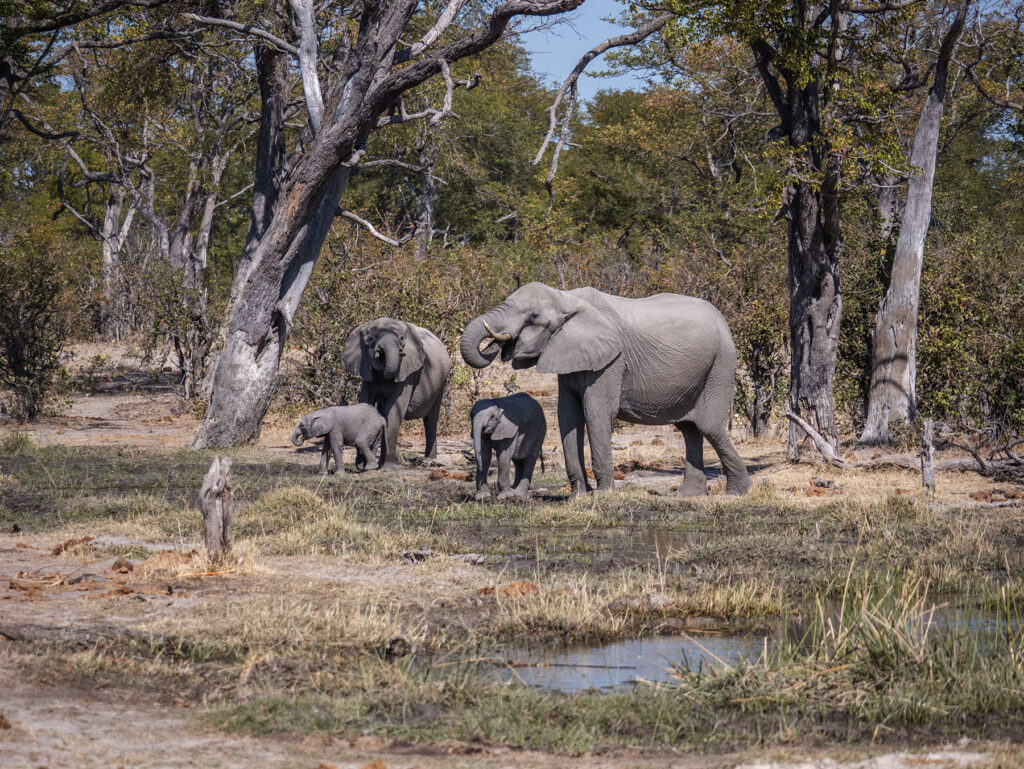
Safaris in Botswana feel completely wild and unlike anywhere else on earth. The parks are unfenced and Botswana’s low-density tourism model means that the parks are relatively quiet. For this reason, Botswana is my favourite country to go on safari.
Inscribed as a UNESCO World Heritage Site in 2014, the Okavango Delta is located at the point where the Okavango River fans out into the Kalahari Desert, creating a unique inland delta that is teeming with wildlife and filled with an unbelievable variety of flora.
As the largest inland delta in the world, the Okavango offers water-based activities that you simply won’t find anywhere else in Africa. You can enjoy Mokoro (traditional canoe) safaris through papyrus-lined channels, for example, or take a boat safari in search of hippos and crocodiles. But it’s also a wonderful place for walking safaris, allowing you to explore some of the numerous islands in the delta with an expert guide.
A true oasis amid the arid sands of the Kalahari Desert, the delta is home to all of the Big Five (although rhinos are extremely rare) and also offers excellent wild dog sightings. Birding is also outstanding here, particularly during the breeding season.
The best time to visit the Okavango in order to see it in all its glory is between May and October when water levels are high but the surrounding lands are dry, as the wildlife is then concentrated in the lush channels of the delta.
There are two key parts of the Delta that you can visit: Moremi Game Reserve and Khwai Community Area. These are the most budget-friendly parts of the Okavango as both house several campsites. As each reserve offers a different landscape, I’d recommend splitting your time between both of them. I spent 3 nights in Moremi followed by 4 nights in Khwai. This felt like a great amount of time to enjoy the regions without feeling too rushed.
The Okavango Delta is also relatively close to several other wonderful safari destinations, including Chobe National Park. If you have the time, you could combine your visit to the delta with a trip to some of Botswana’s other amazing reserves as part of a 10-day itinerary. A popular way to end a Botswana itinerary is in Victoria Falls, just a stone-throw away from Chobe National Park, across the border in Zimbabwe.
Whilst it’s possible to self-drive through Moremi and Khwai, having an expert guide with you can increase the quality of your wildlife sightings. I’d recommend booking with a mobile camping safari company. You still get the truly wild feel of camping beneath the stars but are accompanied by a knowledgeable guide as well as a private chef and camp team.
From Cape Town, you can fly direct to Maun (Airlink offers direct flights, flight time approx. 2.5 hours) and then can either arrange a road transfer (5 hour drive) or light aircraft transfer to your camp. You can then fly back to Cape Town either from Maun again or from Victoria Falls in Zimbabwe, just an hour away from Chobe National Park.
6. Hwange National Park, Zimbabwe
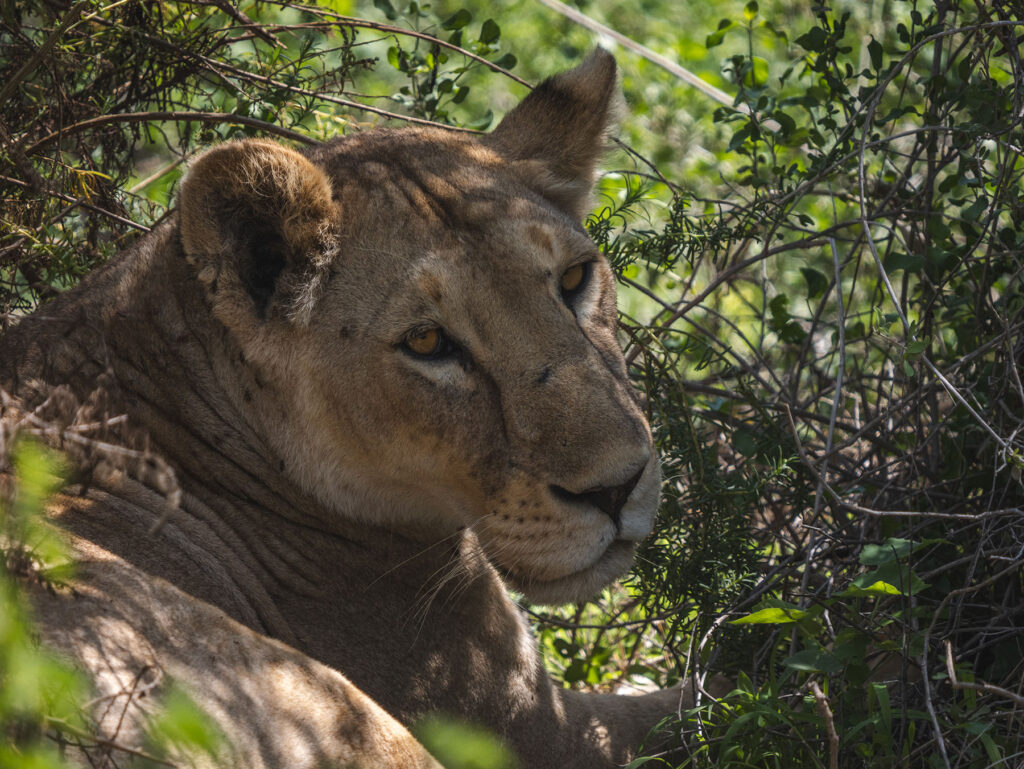
Hwange National Park is Zimbabwe’s largest and oldest national park, covering nearly 15,000 square kilometres of pristine wilderness and boasting diverse landscapes that range from Kalahari sandveld to teak forests.
As the gateway to Hwange National Park is Victoria Falls Airport, a stone-throw away from the falls, it makes sense to combine your safari with your visit to this natural wonder of the world. I’ll never forget the first time I laid eyes on Victoria Falls. It’s one of those places that photos can’t really do justice due to the magnitude of it. You feel surrounded by cascading water!
Covering an area that’s roughly half the size of Belgium, Hwange is home to one of Africa’s largest elephant populations, with a jaw-dropping 20,000 – 50,000 individuals. The Big Five can also be found here (though rhinos are scarce and can be difficult to spot), and the reserve is one of Africa’s remaining strongholds for the endangered African wild dog. With 400+ bird species and more than 100 mammal species in residence, there’s always something incredible to see at Hwange.
The park contains 60 man-made waterholes, which pump water all year round, known as the “heartbeat of Hwange”. During the dry season, elephants gather in their hundreds at the waterholes, making for unforgettable sightings.
Hwange also offers world-class walking safaris with Zimbabwe’s renowned expert guides and guests can enjoy intimate wildlife viewing from the reserve’s underground hides.
The best time to visit Hwange is between July and October (dry season), when animals crowd around the waterholes.
From Cape Town, you can fly direct to Victoria Falls with either Kenya Airways or Airlink (flight time approx. 3 hours) followed by a road transfer (drive time 1.5-2 hours) from Victoria Falls to Hwange’s main gate. Alternatively, you can charter a flight directly to the lodges located within the park.
7. Etosha National Park, Namibia
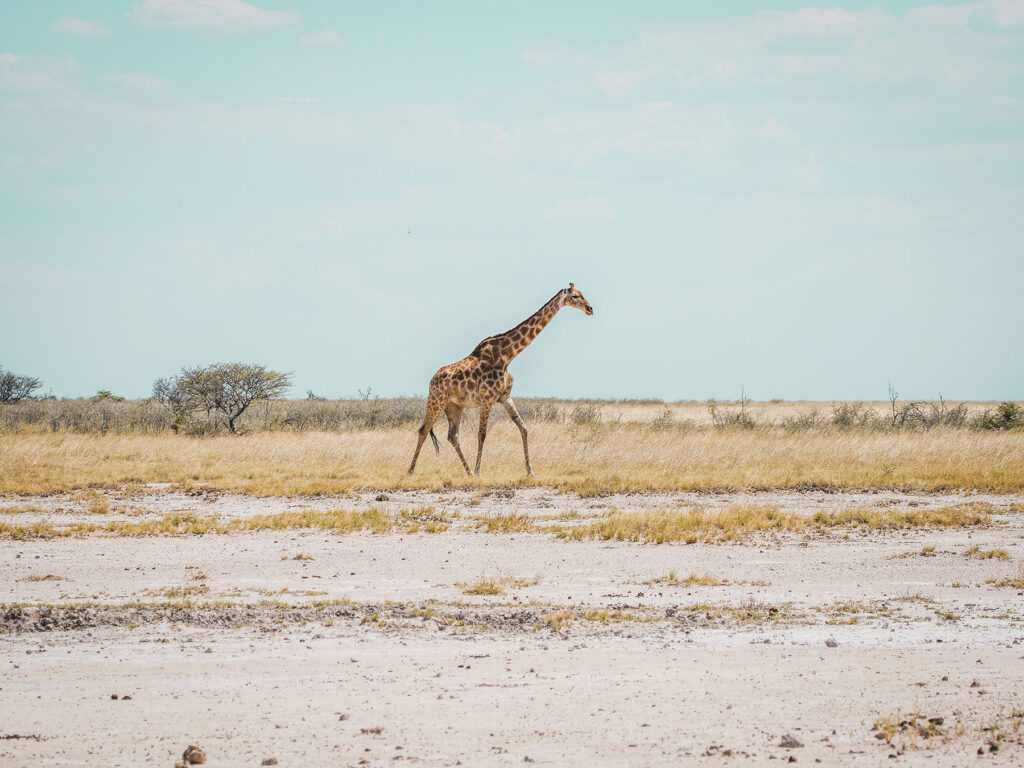
Etosha National Park, whose name means ‘Great White Place’ in the local language, is one of Africa’s largest parks, spanning some 22,000 square kilometres. Dominated by the vast Etosha Pan, a shimmering salt flat so large it can be seen from space, this reserve offers a safari experience like no other.
With well-maintained roads and an excellent infrastructure, Etosha is one of Africa’s best self-drive safari destinations. I enjoyed a self-drive safari through Etosha and saw an array of species including giraffe, zebra, kudu, ostrich and a lion. You will inevitably see more on a guided safari so if your time is short and you have a wishlist of animals, booking a guided safari is the way to go.
Etosha National Park is one of the best places on the continent to see the endangered black rhino. The park boasts healthy lion, elephant, giraffe and cheetah populations as well as endemic black-faced impala, and the unique white backdrop of the salt pan makes for incredibly dramatic photos.
Birders will also be in their element here, with over 340 bird species calling Etosha home. These include multiple eagle and raptor species and several types of vulture as well as flamingos and storks, which can be seen wading in the water after the rain.
A safari experience at Etosha is truly unique, and not just because of the dazzling salt pan terrain. With wildlife gathering in huge numbers at the park’s waterholes, you can simply park at a suitable spot and watch the animals come to you! Etosha even has floodlit waterholes to allow visitors to observe its amazing wildlife at night.
Etosha is suitable for all budgets and has many budget-friendly campsites either in the park itself or just outside the gates. At the other end of the spectrum, luxury lodges can be found in the private reserves which border the park, such as Onguma.
From Cape Town, you can fly direct to Windhoek (flight time approx. 2 hours) and then either self-drive the 4-5-hour trip north, or take a charter flight to lodges like Ongava/Onguma.
The best time to visit Etosha is during the dry season (May-October), when the animals gather at waterholes in greater numbers.
Conclusion
Cape Town is synonymous with great wine and exquisite beaches. But this beautiful city also makes a great starting point for a safari adventure, with options to suit any budget.
Whether you’re planning a short day trip to one of the nearby malaria-free parks or have set your heart on an extended stay at world-renowned reserves like Kruger or the Okavango Delta, Cape Town’s excellent flight connections mean you can reach your dream destination with ease.
The world of safari awaits – now all you have to do is choose which of these amazing reserves you want to visit!
About the Author
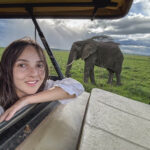
Ella McKendrick is a traveler with a passion for everything Africa! She first set foot on the continent when she was 17 years old and fell head over heels in love. Since then, she has been back more times than she can count and has visited over 10 African countries. If you’re thinking about an African safari, she’s your girl! You can read her in-depth safari guides here or join her army of subscribers over on YouTube.
Thanks so much for reading this blog post! I’ve got so many resources to help you plan your trip to Cape Town – why not start with one of the following?