
Last Updated on April 2, 2026 by Hannah Stephenson
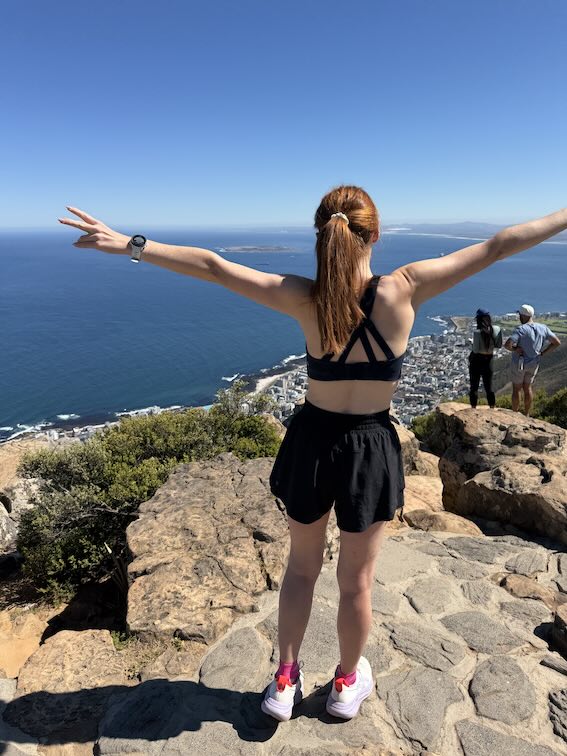
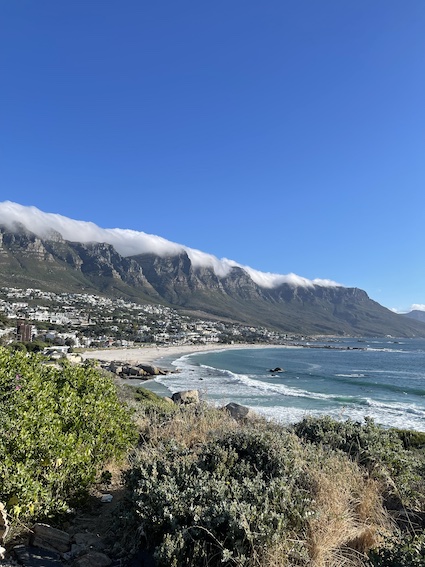
If you’re on Cape Town TikTok, you’ve probably seen certain creators’ comment sections flooded with the same question: “when do you leave”?
Capetonians are angry at the rising cost of living, and that’s fair enough. It’s also clear that the prevalence of Airbnbs in Cape Town has a lot to do with the surge in rental prices.
But news flash: leaving someone a mean comment on TikTok isn’t going to make them go home.
No-one, I repeat no-one, has ever cut their trip short because @user123xyz419 told them to.
It’s time to stop.
Shifting Attitudes
There’s no denying that tourism is a huge source of income for the city of Cape Town. According to Cape Town Tourism, the industry provides over 106,000 jobs, which represents almost 7% of total employment in the city.
And believe it or not, when I first arrived in Cape Town at the tail end of the pandemic, I heard a lot of people decrying the lack of tourists in the city. When I posted a TikTok about my love for Cape Town, the comments were overwhelmingly positive.
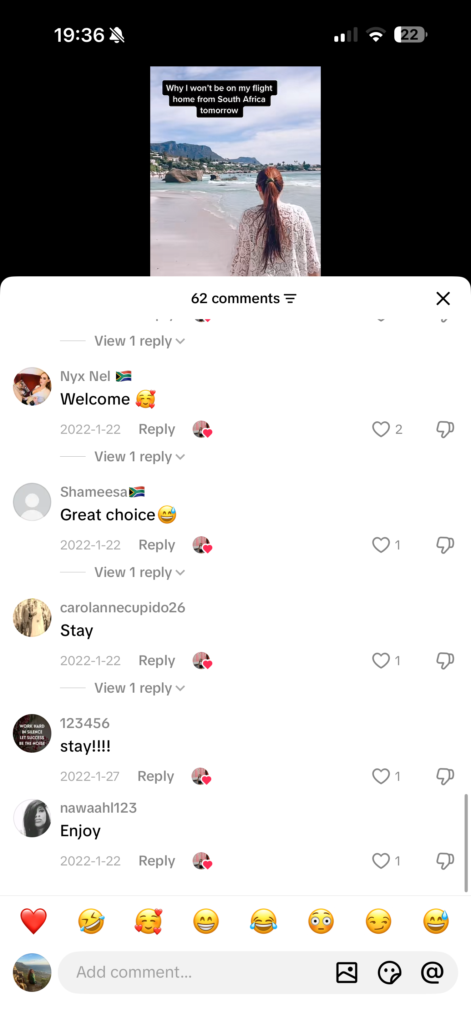
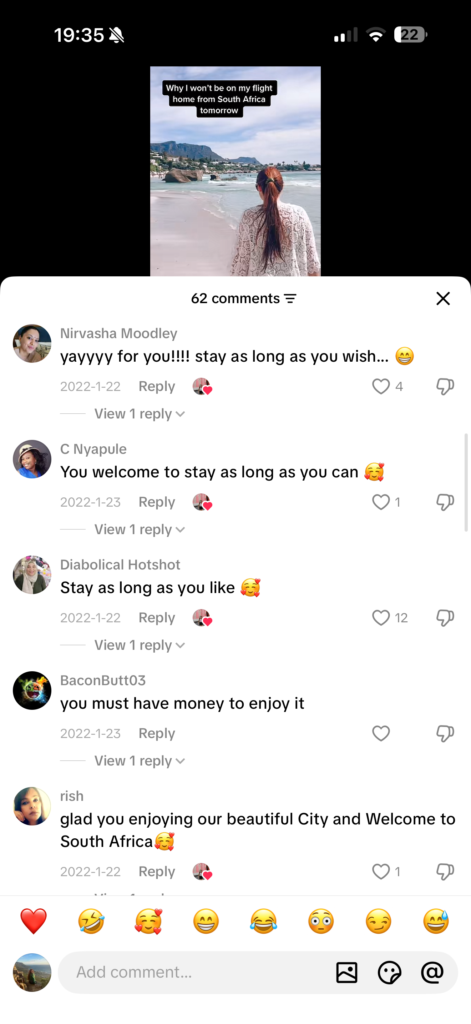
So what changed?
Well, one of my theories is that as the tourists returned, so did the reality of it all. I come from a very touristy city myself, where going into town on a Saturday afternoon is nothing short of a nightmare. House prices are astronomical, and the income-to-mortgage ratio makes it difficult to get on the property ladder. But with that said, I can recognise that we benefit hugely from that tourism.
I mean, in an ideal world we would all like the extra income without the extra people, but that’s just not realistic.
Tourists vs. Nomads
But perhaps the more pressing issue isn’t tourists, but digital nomads – although the two often get conflated, admittedly by myself as well as the good people of TikTok. After global travel restrictions were lifted, Cape Town became a digital nomad hub. It was probably already headed that way, but covid definitely accelerated the shift towards remote working, and digital nomadism has boomed as a result.
And with more people seeking longer stays came a subsequent explosion in Cape Town’s Airbnb market. In fact, GroundUp reported that 70% of rental units in the CBD are AirbBnbs. Although I am skeptical of these figures (which I’ll address in another article), there’s no denying that the huge upswing in short-term rentals has become a major issue in Cape Town.
So is it a surprise that locals aren’t happy with digital nomads? No, probably not. And it’s also unsurprising that this negative feeling has bled over towards tourists only staying for a shorter period of time – although some TikTok creators do welcome short-term visitors.
One Rule for Me…
However, in some cases I’ve noticed a certain level of hypocrisy involved. It’s certainly interesting to watch creators bemoan the influx of foreign tourists in Cape Town, and then jet off to Bali.
Now, don’t get me wrong. I know that your average Capetonian isn’t doing that, but there are definitely people who are.
Take Henry, for example (not his real name). I’ve known Henry for a long time now, and he loves to repost anti-tourism content. Fair enough, as I don’t think he actually goes and harasses any individuals, but I must say I was surprised to see him jetting off to Madrid and Seville on holiday. Maybe he was unaware of the anti-tourism protests, or perhaps it just doesn’t count when he’s the tourist? Hard to say.
I also met Henry in an entirely different country, where the rand goes a lot further. He was on his gap year, and working illegally which means he wasn’t paying tax.
In a roundabout way, Henry’s hypocrisy leads me to my next point about nomadism specifically: wouldn’t we all do it if we could? If someone came up to you and offered you a higher standard of living with a much lower cost, wouldn’t you take it? Who among us would turn down the chance to live our best lives in the sunshine while still actually being able to put something aside for the future?
And would the fact that not everyone has the privilege of doing this really stop you?
A Systemic Issue
Digital nomads, myself included, have grabbed this chance with both hands. And while, yes, it has created problems, I don’t think that we can really blame the individual. I certainly don’t believe there’s anything to be achieved by trolling strangers online.
I truly believe that this is a systemic issue, rather than an individual one. People are going to do what’s best for themselves, every time – and that’s where regulation comes in.
And if you need any examples of the human tendency towards selfishness, just take a look at the popularity of SHEIN or cosmetics brands who test their products on animals. There are a lot of conversations around both of these issues, but when most people want a cute outfit or a viral beauty product, they still click that order button.
When something is cheaper, easier, more convenient, or just more beneficial for us, that’s what we tend to choose.
Sure, it’s easy to direct this frustration at individuals on TikTok because they’re visible. However, I think it’s worth remembering that they’re operating in a system that makes these choices possible. Cape Town is desirable and those Airbnbs are available, so they’re going to be booked.
And it goes for the landlords, as well. When they can make a bigger profit by listing their place on Airbnb versus renting to a local, that’s what they’re going to choose. Sagely, though, they don’t tend to post about this online and tend to get spared a lot of the vitriol.
New Measures
Speaking of landlords, I was happy to learn that the government is finally putting measures in place to control the Airbnb epidemic. According to IOL, Cape Town’s Department of Tourism has drafted a code that would subject Airbnb owners to pay the same rates as hotels and adhere to stricter health and safety standards. Now here’s a measure that might actually be effective (sorry, @user123xyz419).
But let’s talk about another measure for a moment. In March 2025, South Africa’s digital nomad visa officially opened for application. This is initially a 12-month visa, although it can be extended to last for up to 36 months in total. Crucially, it requires digital nomads to register with SARS and pay tax if they spend over 6 months of the year in South Africa.
This puts paid to two of the major arguments against digital nomads – long-term ones, at least.
The first is that they don’t pay any tax. Of course, you could still obtain the visa and stay for less than 6 months, but there would be no point in doing that, since you can make a tourist visa last for up to 6 months anyway. (For more on that, read this article.)
The second is that they live out of Airbnbs. Airbnbs are significantly more expensive than long-term lets. One of the major perks of obtaining the digital nomad visa is that you can take out a year-long lease on an apartment and save yourself a huge chunk of change.
And while, yes, this is still a foreigner taking up a unit in the city, it’s certainly not the same thing as removing that unit from the long-term rental market entirely. It has a far smaller impact on prices, and it comes closer to striking a healthy balance between foreign income and housing availability. Meanwhile, nomads would also be paying into the system via income tax, not just because they’re spending a lot in Maggy Lou’s.
Unfortunately, the Daily Maverick reported that the uptake of the visa was underwhelming, with just 24 applications. However, there are two glaring issues with the article. The first is that it confuses the digital nomad visa being made legal with being ready for application. In actual fact, 11 months lapsed between these two events.
The second issue that the article overlooks is the fact that it’s unclear how to even apply for this visa. On VFS’ website, there is no mention of a remote work visa on the drop-down menu. So without so much as a clear place to start the process, how are you meant to submit an application?
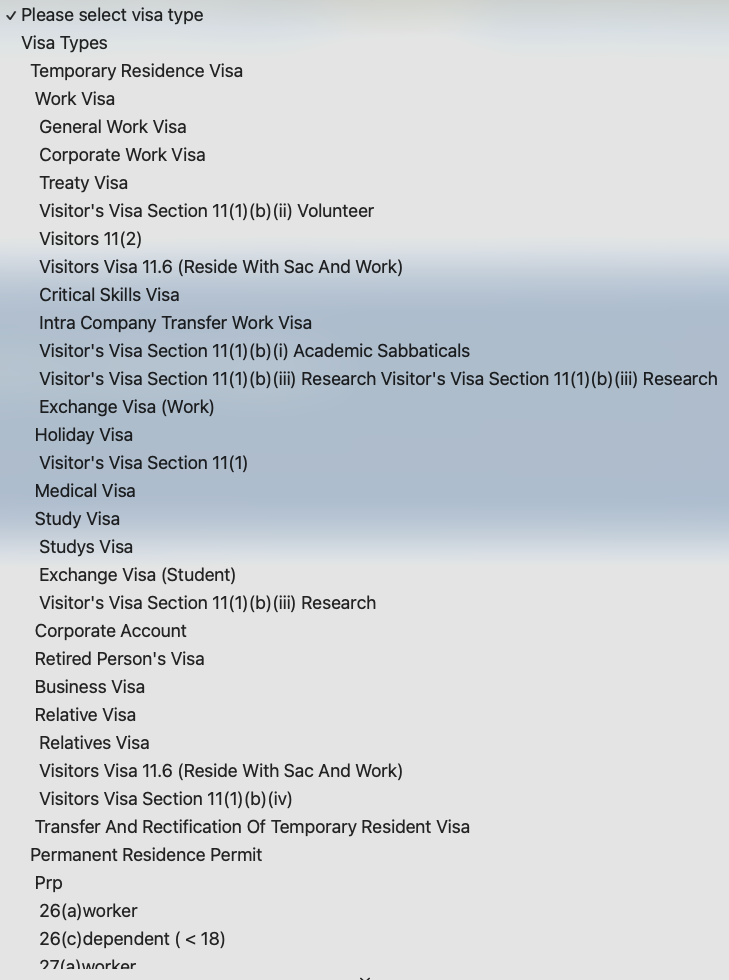
And more importantly, where does that leave us?
Well, if there’s one thing that this whole situation makes clear, it’s that online hate isn’t going to change anything. Whether someone’s a tourist on holiday or a digital nomad trying to build a better life – or just escape the winter blues – they’re not the one setting the rules.
The tourists and nomads aren’t the ones who have a say in housing regulations and rent control. They’re just choosing what’s best for them, and that’s what people are prone to do.
So yes, be angry about the cost of living and be frustrated about the housing market. However, directing hate at people sharing their travel moments online isn’t going to impact meaningful change.
It’s clear that tourists and nomads aren’t going anywhere, so rather than telling Greta from Frankfurt to pack her bags, the focus should be on pressuring the government to create a more sustainable system in which tourism can benefit local life.
Or, you know, go to my TikTok and tell me to votsek. It will boost my engagement – and waste your time.